

If you were building websites in the early 2000s, Flash was not optional. It was expected. Clients wanted animation, movement, and sound. Static HTML pages felt flat by comparison. Flash delivered things that nothing else could at the time, and for a window of about a decade it was genuinely the most capable creative tool on the web.
It became a punchline later. That reputation is not entirely undeserved. But dismissing Flash entirely misses what it actually accomplished.
What Flash Made Possible
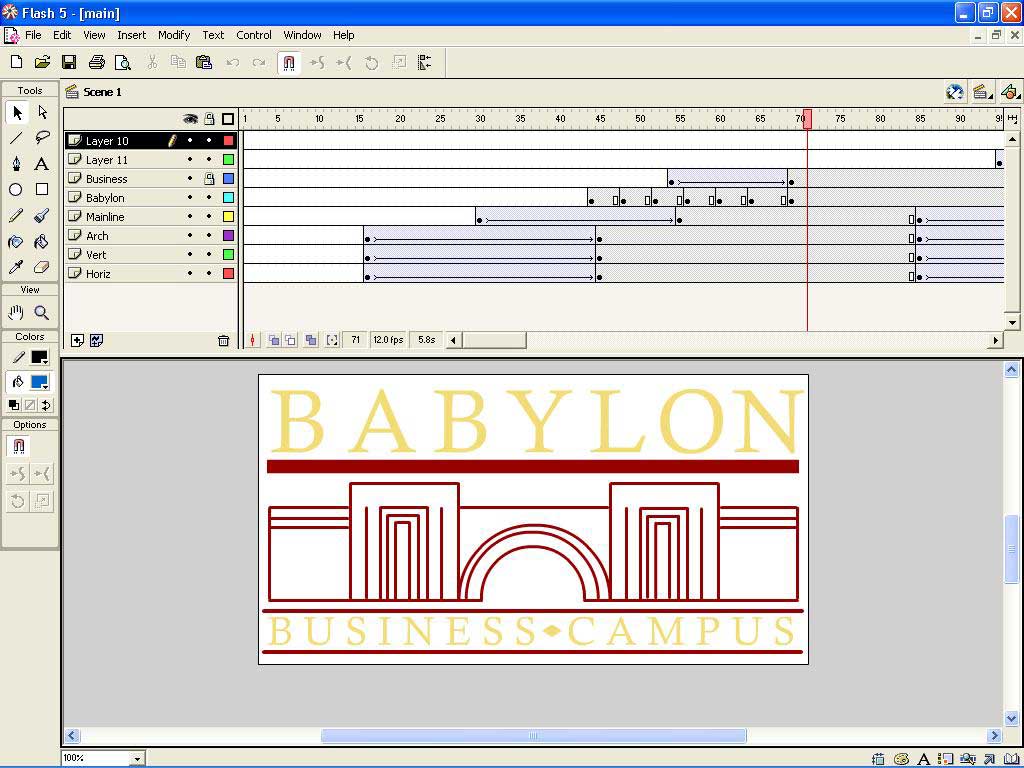
Before HTML5, before CSS animations, before JavaScript frameworks matured into what they are today, Flash was how you put motion on a web page. Not a blinking gif. Not a marquee tag scrolling text across the screen. Actual animation with timelines, easing, sound, and interactivity.
Flash applications could handle things that the browser itself simply could not do in 2001. Vector graphics that scaled cleanly. Video before browsers had a native video element. Games. Interactive product demos. Intro sequences that set a mood before a site loaded.
For a small web operation trying to deliver something that looked professional and felt alive, Flash was the tool that made that possible.
The Up Bus
WebGraphicsRus had a Flash intro. We called it the Up Bus.
It was an animated sequence built to run before the main site loaded. The concept came out of wanting something that felt like an arrival — something that signaled you were entering a space that had been thought about. A bus going up, dropping you off at the site. Simple enough but it took real work to build cleanly in Flash at the time.
The FLA source files from that project were recovered from old hardware. Finding them still intact was one of the more satisfying parts of going through the archive. FLA files from 2001 are not exactly common anymore.
Why It Got Killed
Flash did not disappear because it was bad at what it did. It disappeared because of a combination of factors that compounded over time.
Mobile was the beginning of the end. Flash never ran well on phones and Apple’s decision to exclude it from the iPhone in 2007 was a turning point that the platform never recovered from. Steve Jobs published an open letter in 2010 explaining the decision. Whether you agreed with the reasoning or not, the market followed.
Security vulnerabilities piled up. Adobe issued patches regularly but the attack surface was real and the updates were constant. IT departments started blocking it. Browsers started prompting users before running it. Eventually browsers stopped supporting it altogether.
Adobe officially ended Flash support on December 31, 2020. Most major browsers had already pulled the plug.
What It Left Behind
A generation of interactive web content is now largely unviewable without emulation tools. Games, animations, educational applications, entire websites built in Flash are functionally gone unless someone has preserved the files and the means to run them. The Internet Archive has done some of this work but it is incomplete.
The skills carried forward even when the tool did not. Understanding animation timelines, interactive state, and how to think about a user experience as something that moves and responds — that thinking transferred into other tools even after Flash was gone.
Flash was not a gimmick. It was the right tool for a period when the web needed to grow up visually and nothing else was ready to do the job. The fact that it was eventually replaced does not change what it made possible while it was here.
Internal links: How WebGraphicsRus Began — When ASP Was the Answer — Recovering Files from Old Hardware