
In the early 2000s getting a business online was not as simple as signing up for a platform and choosing a template. There were no drag and drop builders. No WordPress with a library of themes. No hosted e-commerce solutions that a non-technical person could set up in an afternoon.
You hired someone who knew what they were doing, or you figured it out yourself. WebGraphicsRus did both learned the work and then did it for clients who needed it done.
Design and Development
Websites built through WebGraphicsRus were custom from the ground up. HTML, CSS, and server-side scripting using Active Server Pages on Windows hosting. The structure was built around what the client actually needed not a template stretched to fit, but pages designed for the specific content and goals of that business.
Search engine behavior in that era worked differently than it does today. Submission to the major directories and engines was part of getting a site found. Site structure, page titles, and meta information mattered and were handled as part of the build rather than as an afterthought.
The When ASP Was the Answer post on this site goes into detail on the server-side technology that powered the more functional builds from this period.
Web Applications and Custom Tools
Beyond standard website builds, WebGraphicsRus developed server-side applications for clients who needed their site to do something rather than just present information.
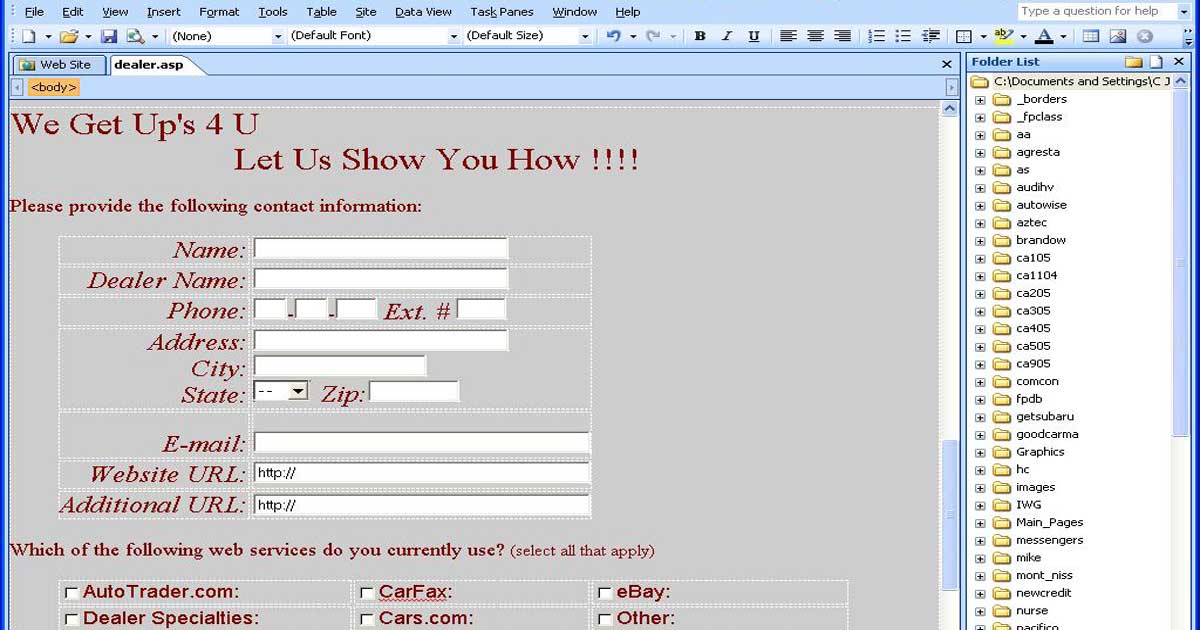
Credit and finance application forms that submitted securely. Dealer login systems that gave clients access to their own data. Calculators and database-driven tools that supported real business workflows. The Dynamic Description Creator built for automotive dealers is one documented example a form-based tool that generated consistent vehicle descriptions at scale, solving a real production problem for dealers listing inventory online.
The Dealer Login Systems Before the Cloud post covers how client access tools were built when there was no platform to handle it for you.
Flash and Animated Presentations
For clients who wanted something beyond a static site, Flash provided capabilities that nothing else could match at the time. Animated intros, interactive navigation, motion graphics, and video-quality presentations built entirely in a browser plugin.
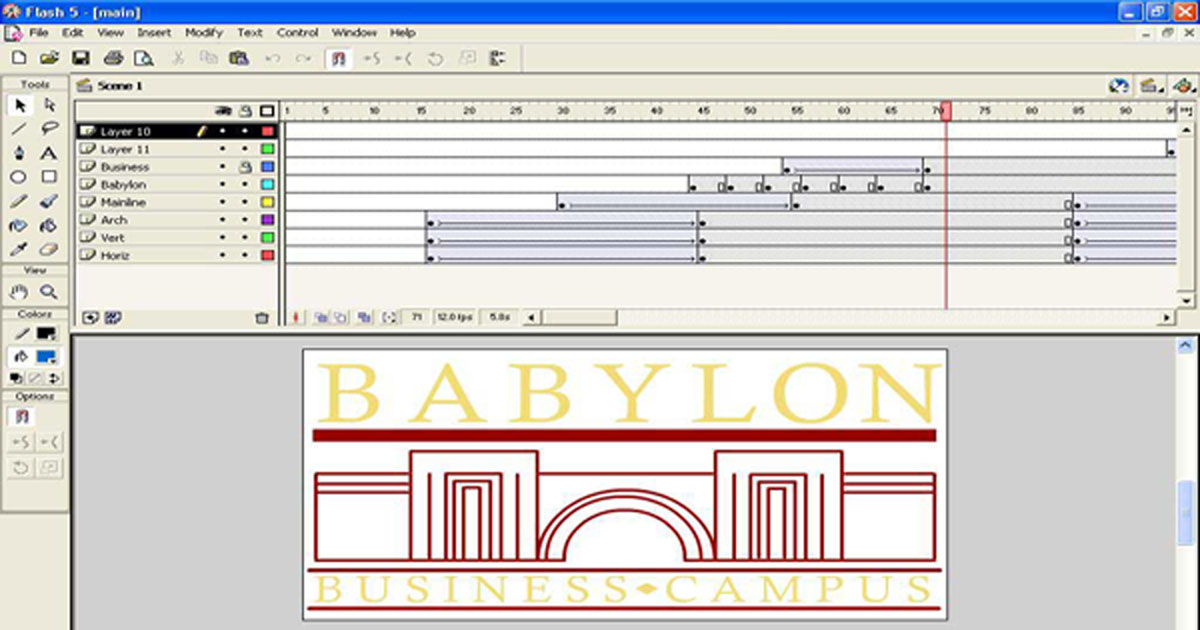
Babylon Business Campus in Horsham, Pennsylvania was one client whose Flash site from that era has been preserved and is documented on this site. The A Flash Site That Still Runs post includes a screen recording of the actual site running on recovered hardware one of the few surviving examples of Flash work from that period.
The Flash Was Not a Gimmick post covers the broader story of what Flash made possible and why its disappearance took more with it than most people realize.
Graphics, Branding, and Online Advertising
Visual presentation was part of every project. Custom banners, buttons, logos, and graphic assets built to work across websites, auction listings, and promotional campaigns. The original animated GIF banner from 2001 that still appears on the WebGraphicsRus home page is a surviving example of that work.
Branding services occasionally extended beyond digital assets. Some clients needed coordination with physical vendors for signage, embroidery, and screen printing to carry a consistent identity across their online and offline presence. That kind of end-to-end thinking about a brand was not common from a small web operation at the time.

Present-Day Context
The tools have changed completely. The thinking behind the work has not. A website that is built around what the business actually needs, loads quickly, communicates clearly, and earns the trust of the people who land on it is still the goal. Everything else is just the current set of tools for getting there.
Web and IT support that grew out of this work continues today at PCITService.com. Current website services including WordPress development and hosting support are available there.